Senegal’s Teranga, Joie de Vivre and Grandmothers who say no
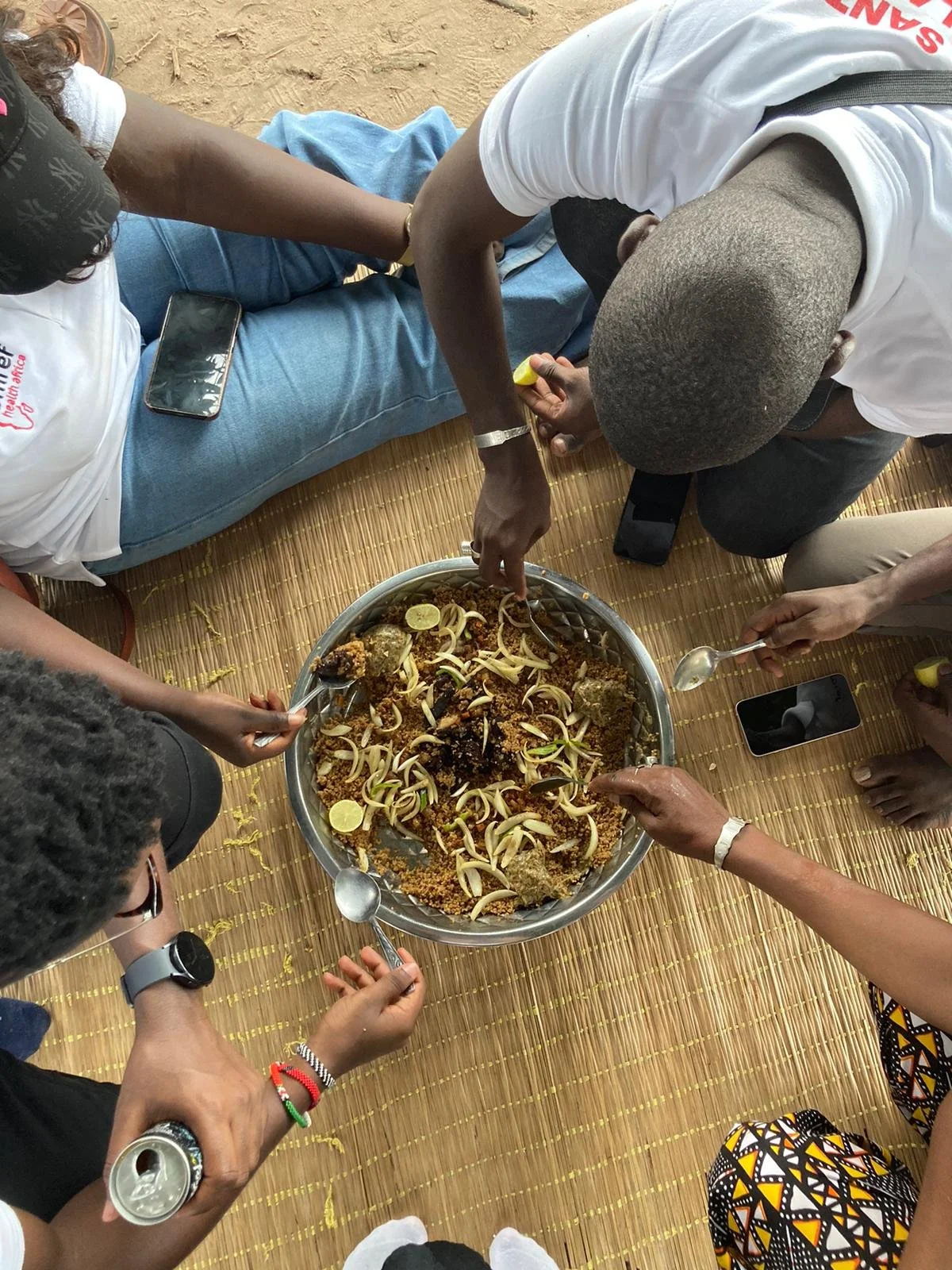
In the spirit of Teranga, we feast.
I was listening to Mel Brooks the other day. I think it’s an old interview.
He said: Pick someone with joie de vivre. Someone who loves life.
Now, to be clear, this story is not about dating. It is not about romance. And it has nothing to do with Mel Brooks. I just put the words so I could sound clever for three French sentences.
This is really about Senegal. About joie de vivre. About Teranga. About interesting border controls. And about women like Kadi, who are making sure that girls have a real chance to love life, not just survive it.
Because that is the thing about joie de vivre, it sounds beautiful in French. It rolls off the tongue. It feels to me like it belongs in a perfume ad, or on a tote bag, or in the biography of someone who lived a full life.
But in southern Senegal, I kept coming back to a harder question: what does loving or enjoying life mean when girls are still at risk of having joy, safety and choice taken from them before they are old enough to spell any of those words?
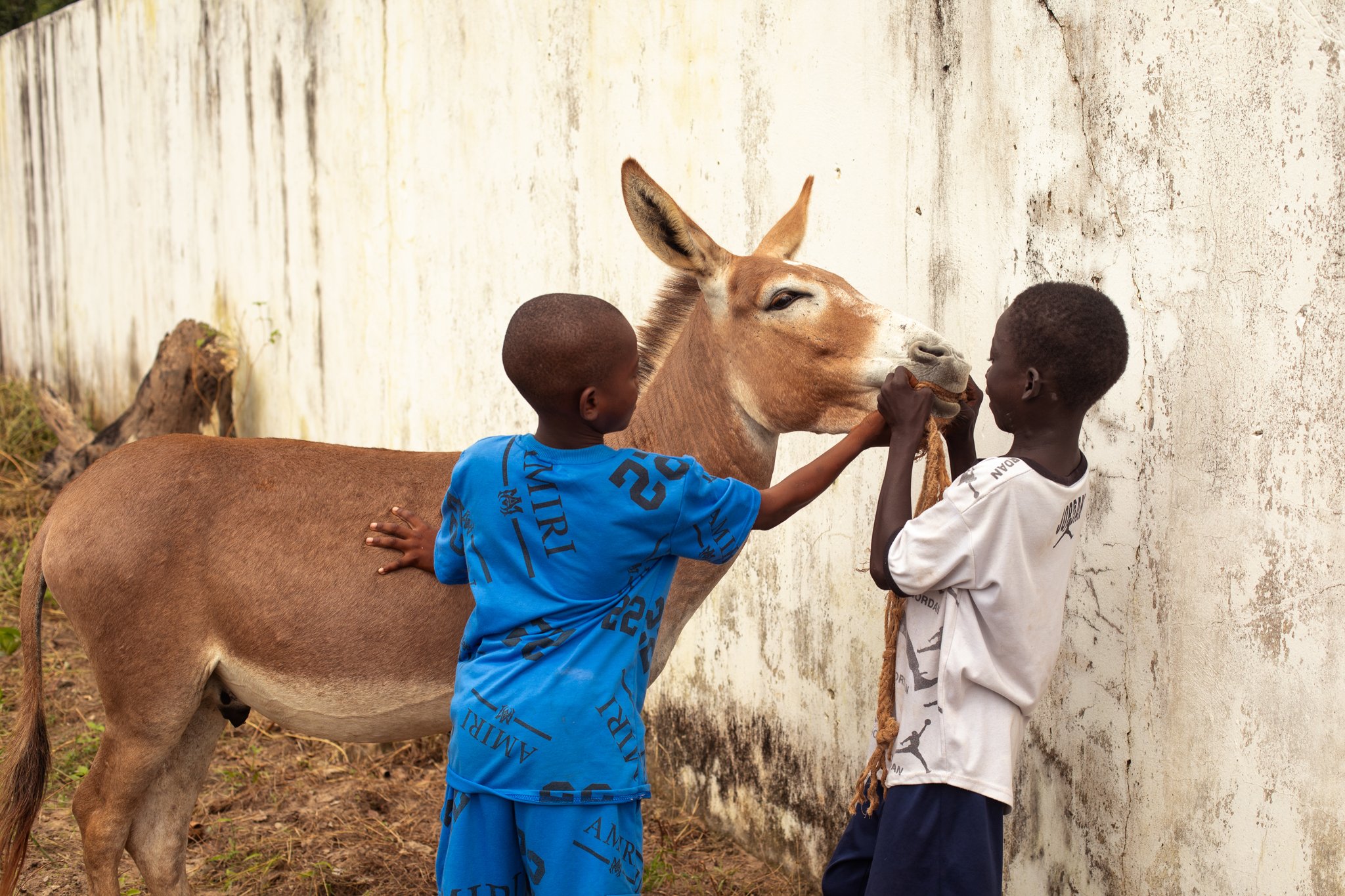
First, though, Teranga.
If you have spent time in Senegal, you know people do not just mention Teranga. They embody it. You can translate it as hospitality, but that does not quite do it. It feels a little thin, like calling jollof ‘rice.’ Like, what do you mean, rice? Technically correct, spiritually, useless.
Anyway, Teranga is warmth. Care. Generosity. It is people making space for you. Feeding you. Helping you. Checking whether you have eaten, and then, not trusting your answer and feeding you anyway. Much of Senegal felt like that to me, especially on the long road from Dakar down south toward Kolda. It is a beautiful stretch of Africa. Big skies. Red earth. Long distances. Lovely people.
And then there is the geography.
To get to southern Senegal by road, you pass through The Gambia. Which means that colonial history is not merely my primary school teacher, Mr Koech, ranting about it. Sometimes it is a man in uniform staring at your passport like he is reading a Shakespearean play.
The Gambia, as I was reminded, is Africa’s smallest non-island country, shaped in part by old imperial compromises. Which is a neat historical phrase for ‘Europeans drew lines, and now you need four stops, several stamps, and a patient driver to get where you are going.’ Going down was relatively smooth. You stop. They inspect. They stamp. You stop again. They inspect again, not sure why. Then they wave you through.
Coming back, however, things became more creative. I was informed that my visa, apparently, was one-way. A one-way visa. I had no idea what that meant. Dave, our driver, seemed to know, or at least had the confidence of a man who had argued with barriers before and won. At each stop, he explained, reasoned, negotiated, and generally carried us through with the stamina of a diplomat and the patience of a saint. The man he is!
In my diminutive stature, I mostly stood there looking innocent, which, I think, helped no one.
Anyway, Teranga returns in full colour, once that’s over. People welcome you with an ease that is difficult to fake. Meals appear. Directions are given with enthusiasm and large hand gestures. You are looked after.
I walked into a barbershop at one point, armed with my two French words and overconfidence. I was certain I was about to deliver some form of Francophone communication. What I delivered was an absolute tragedy. Everyone was puzzled. They laughed. Kindly. They helped me. Also kindly. I survived. This, too, is Teranga: being rescued from your own nonsense.
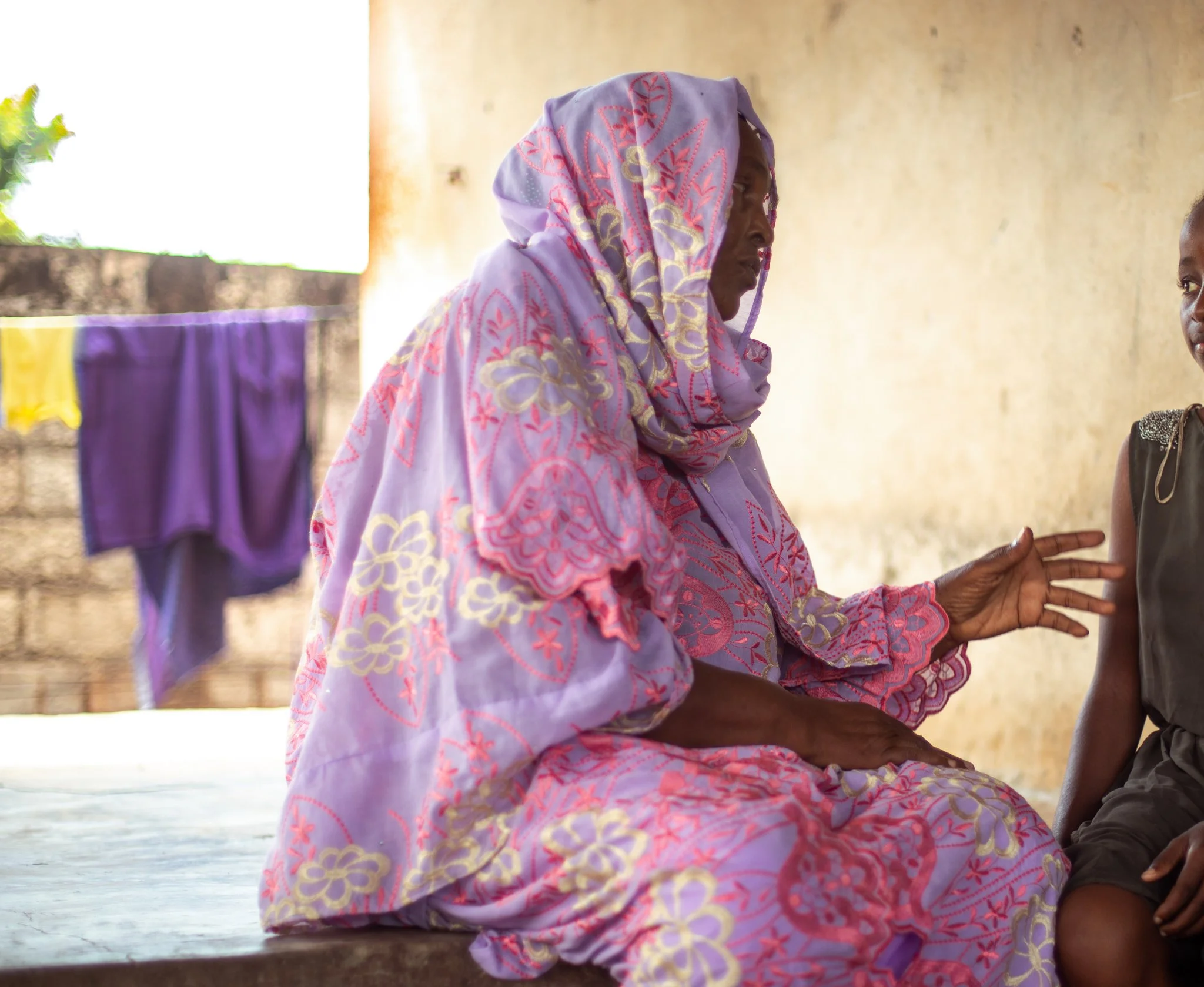
Kadi speaks to a young girl. Photo: Lamine Diao
Then there is the other issue.
A heavier one.
Because you cannot talk honestly about love of life in this part of the world without talking about the ways girls are still denied the fullness of it. There is the issue of female genital mutilation and cutting. And there is no elegant way around that sentence.
We met girls who had survived it. They meet at the Centre Conseil Ado (CCA). This is the adolescent counselling centre, a youth space of sorts where young people can get information, counselling, and support, very often around sexual and reproductive health. We heard repeatedly that in some places, Female Genital Mutilation and Cutting (FGM/C)can happen when children are very young. We heard, too, that it is often hidden, defended, whispered about, or carried quietly in women’s bodies for years.
That is not joie de vivre. That is fear living in the same house as childhood.
Sixty-year-old Grandma Kadiatou knows this too well.
She is one of the women known as Badiène Gokh: trusted elder woman, community guides, protectors, mediators, part auntie, part strategist, part miracle. The sort of woman you call when life is in a mess, and you would prefer not to explain everything twice.
And Kadiatou is not just respected. She is also funny. People call her ‘Mother Kadia.’ Some call her ‘Baby Kadia,’ which is delightful for a woman in her sixties. She laughs with people. She talks with everybody. She does not carry herself like a notice board. No. She carries herself like someone who knows that hard conversations land better when people are not terrified of you first.
That matters.
Because the work she does is serious. She takes pregnant girls to hospitals. She helps girls get back to school. She steps into family conflicts. She brings vulnerable girls from villages to stay in her own house for safety. “I don’t have daughters in this house,” she says, “only the daughters of others that I welcome.”
That is Teranga, too, by the way.
Not just feeding a guest.
Protecting a girl.
Not just saying welcome.
Saying stay here, you are safe.
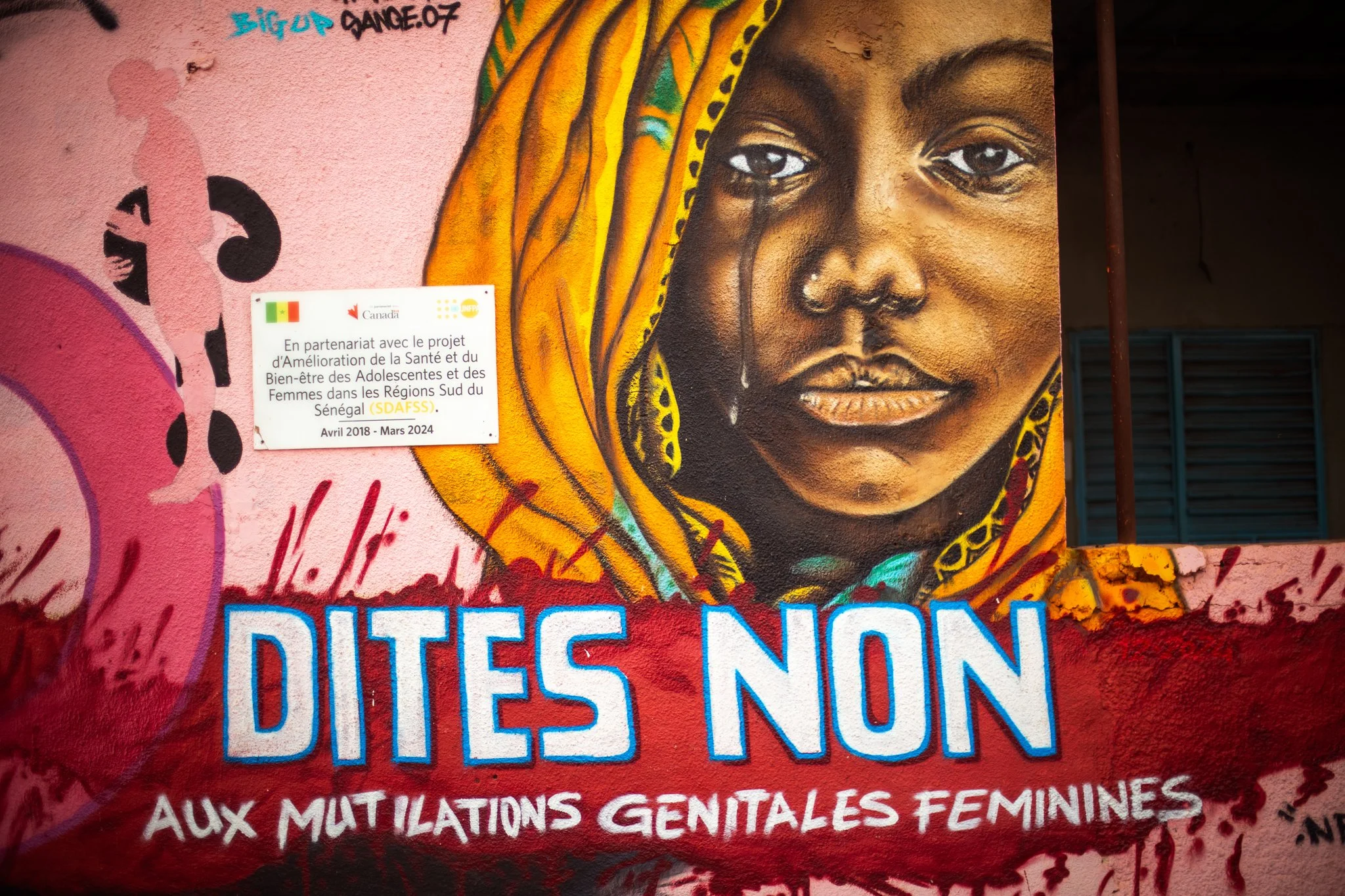
A mural at a youth centre in Kolda reads “Say not to Female Genital Mutilation”
She speaks about FGM/C with authority because she has lived the consequences. She says she experienced excision herself and forced marriage, too. She says it caused suffering that lasts a lifetime. She talks about pain, infections, complications, and the kind of damage that follows women into marriage, into childbirth, into everyday life. She also says something else: Girls today are luckier, because at least now people are speaking openly about it.
That word again: openly.
Because silence is half the problem.
This is a change that respected Badiène Gokh, like Kadiatou, is bringing. And they are doing it in communities where things are rarely simple. Kadiatou lives in a border zone with Guinea-Bissau, where people move across the neighbouring countries. Usually, the law is not applied uniformly across borders, and therefore, awareness has to keep going among women and men. Laws matter, yes, she says. But laws by themselves do not sit in the courtyard and change minds. People do. Trusted people. Funny people. Grandmothers in bright wraps who know everyone’s business and use that knowledge for good.
Kadiatou says people are told that a Badiène Gokh never lies. She says, well, sometimes she does lie. She once told someone that the police had sent her to save a girl. Honestly, that may be my favourite kind of moral flexibility. The sort reserved for women who are too busy protecting children to be overly loyal to technicalities.
And maybe that is where this whole journey landed for me.
I went looking, at least partly, for stories… people’s stories, beauty, hospitality, more stories, and a few clever French lines. I found all of that.
But I also found that joie de vivre is not a decorative phrase. Not here. Not when girls are at risk. Here, it is something more urgent.
It is the right to grow up whole.
The right to stay in school.
The right not to be cut.
The right not to be forced.
The right to laugh without carrying hidden pain.
The right to enter womanhood without injury.
And it is women like Kadiatou and grandmothers like her who are pulling that joy a little closer.
Through warmth. Through stubbornness. Through humour. Through trust. Through the kind of love that knows when to laugh and when to fight.
So yes, Senegal gave me Teranga. It gave me beauty. It gave me bureaucratic border drama. It gave me another chance to embarrass myself in public with limited French.
But it also gave me this: Sometimes joie de vivre is not a feeling.
Sometimes it is a woman in a head wrap, being called Baby Kadia, opening her home to the daughters of others and refusing, absolutely refusing, to let pain have the final word.