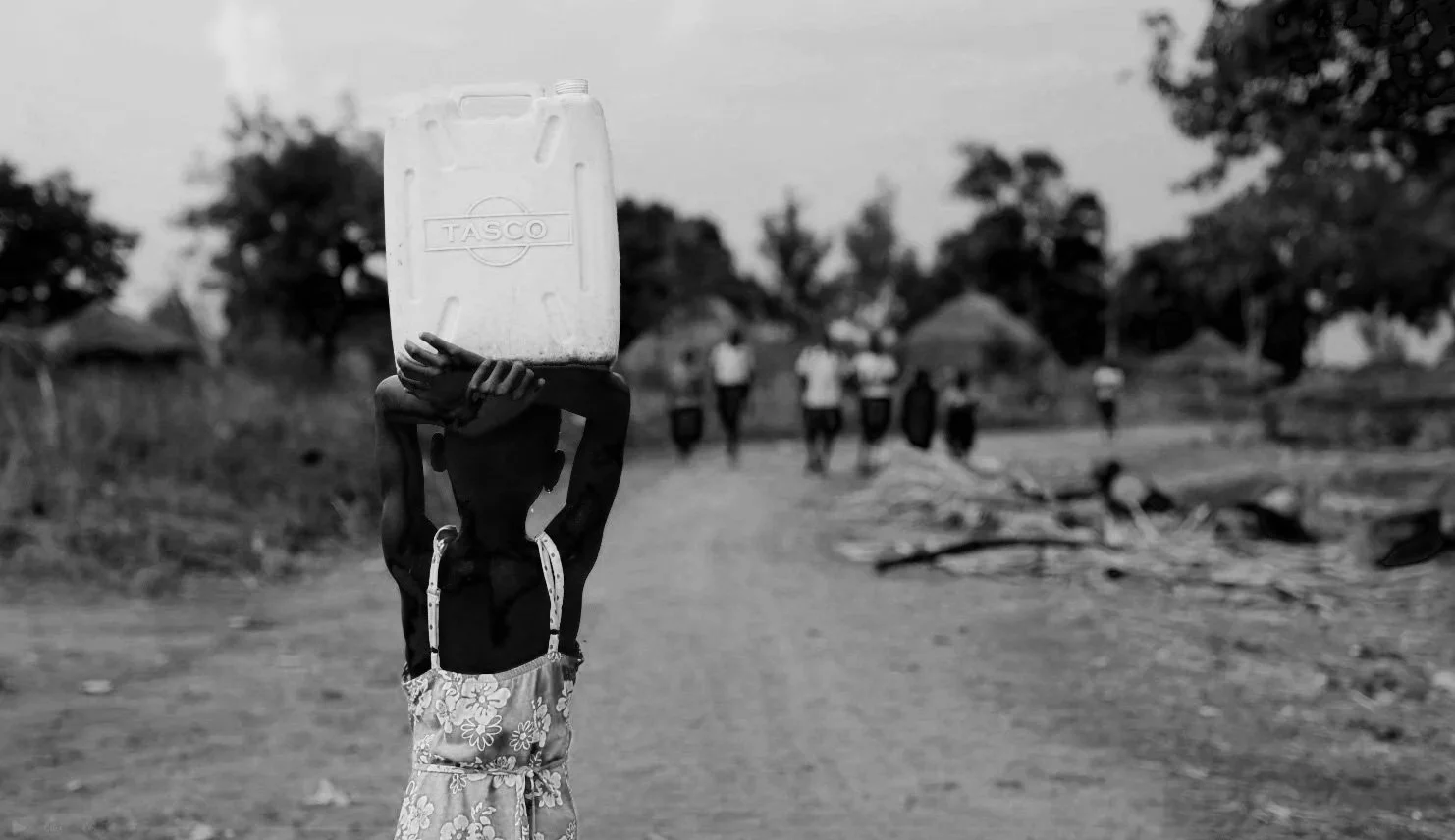
This is based on conversations I had with three wonderful young women, high school and university students, from Amuru District in northern Uganda. I won’t mention their names, but I carry so much gratitude for the openness and honesty they shared with me. They spoke about their everyday lives: the joys, the challenges, the hopes, and everything in between. To these young women: You will go on to do great things!
Amuru District, Uganda
In our district,
To be a girl is already hard.
Outright.
From birth, you’re boxed into a path that will test you to your limits—and threaten to break your spirit. You are up against powerful forces: Some cultural practices; your education not a priority, per se.
On a good day, you make it to school. Then, somehow, your period arrives, and there’s no pad, no changing room, no clean water to freshen up. So you go back home and miss school for an entire week. You miss a week every month anyway, and it’s almost a norm, so it’s a shrug for you as the students learn.
And when you have to fetch water, it’s not from a tap outside. No ma’am. It’s not even from a borehole in the village. You would hope. But no. It’s from an exposed water source, out in the wild, a dirty, open well your village shares with wild animals and cows. It’s your job to fetch water because “you’re the girl,” they say.
To get to that water source, you walk through the bushes with your jerry can. Sometimes, you have to go just before dusk. On the way, you fear the slithering snakes, and worse: sex predators watching your steps as you disappear into the loneliness of the thicket.
And then it happens.
A hand grabs you. Yanks you away.
Your scream vanishes into the emptiness.
No one hears. No one comes.
When it’s over, you’re left in the dirt, your body violated, your innocence stolen. You are in tears. Hoping the world ends. Now.
It doesn’t.
So you have to decide: do you get up and run home, or keep going for the water you came for?
Your heart is pounding.
What happens now? And where, in all this, could it possibly have been your fault, except that you were born a girl? You wonder. It was the day the midwife told your mother, “It’s a girl,” that your fate was almost sealed.
Almost.
Almost, but not quite, because there’s something that can be done for the next girl. Almost means there’s a chance.
Would water in your village have prevented this?
Would a clean toilet and a changing room at school have helped you?
Absolutely.
Something as basic as water would have changed your story… and can save the next girl.
Water. That liquid. You shake your head.
And in your heart, you see your younger sister playing around. You fear for her. But you still hope that water somehow comes closer to you.
Because maybe, just maybe, water is the one thing that can shift everything.
That’s the chance for a girl here.
Because almost means there’s room for hope.