Do Not Forget the Health Workers of South Sudan
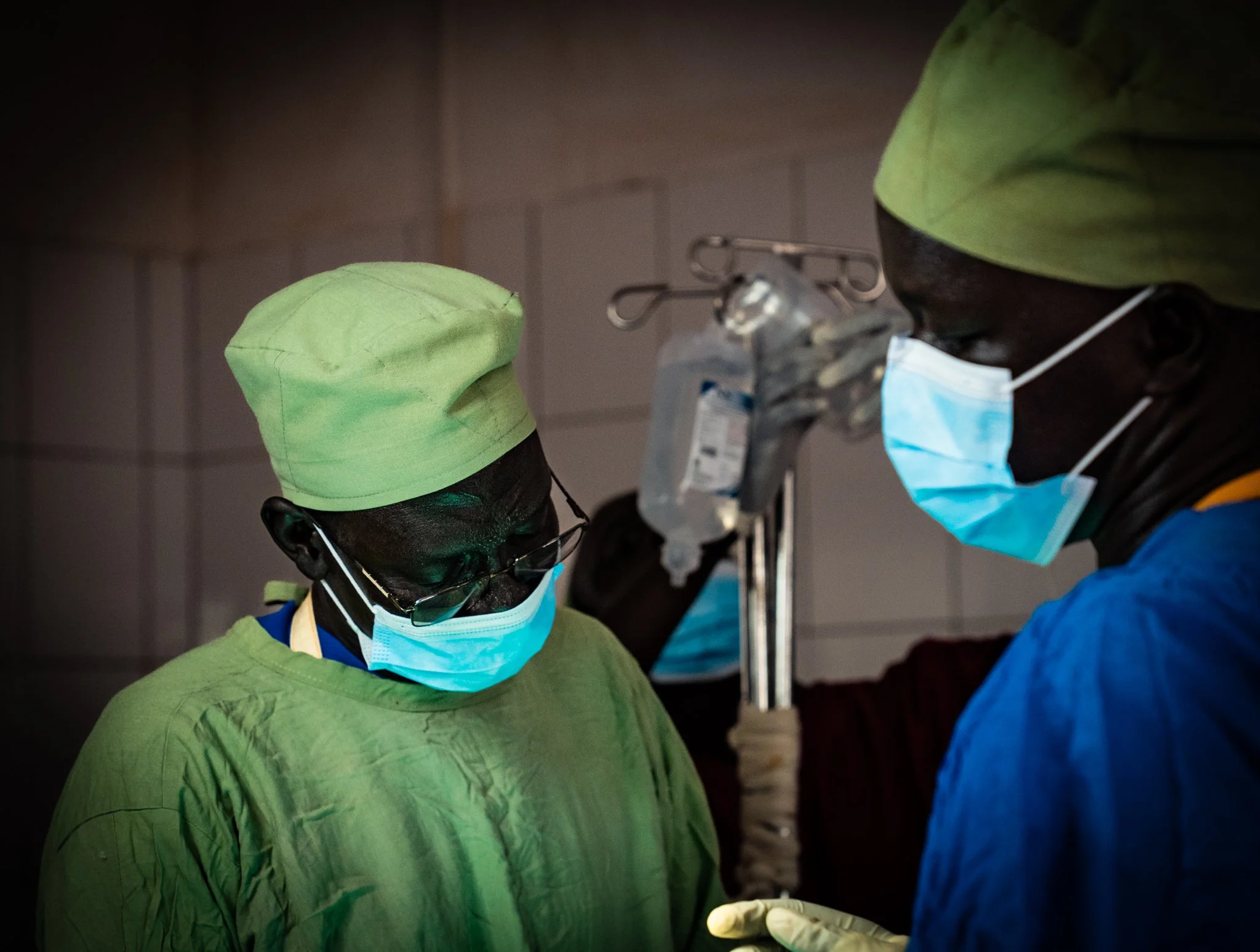
Dr Mathiang, performs surgery at Tonj Civil Hospital in Waarap State of South Sudan.
South Sudan, the world's youngest, turns fifteen years old.
I have met some of the most dedicated health workers I know in South Sudan. Doctors. Nurses. Midwives. Community health workers. People who keep showing up in circumstances that would make many of us resign emotionally before we even arrive physically.
And that is the thing about South Sudanese health workers: they are not just doing jobs. They are holding a fragile line between life and death, often with very little in their hands except skill, courage, and an almost unreasonable commitment to their people.
I once met a nurse, Victoria, from somewhere in Warrap State, who told me a story I have never really shaken off. In her village, when a woman developed complications during childbirth, there were times when desperate, untrained men tried to cut babies out of the womb with knives. Just writing that shakes me. knives. I cannot wrap my head around it. Victoria is very calm, and she tells the story quietly, as people often do when pain has become too familiar. “How could witnessing that not convince me to become a midwife, someone who could care for women with dignity and skill?” she asks me.
How indeed?
You begin to understand that for many health workers here, medicine is not an abstract profession. It is personal. It is memory. It is grief, turned into service.
Another story comes to mind.
Lawrencia, a student midwife, tells me about another woman in a remote village in Lakes State who goes into labour. There are suspicions in the village that she is HIV positive. As her pains intensify, her family does what families in rural places do. They place her on the back of a bicycle and start the journey to health centre. That journey, by the way, is not some neat little ride to a nearby health centre with a road sign and a paved entrance. No. It is long, rough, and exposed. Bush. Distance. Delay.
And on the way, she becomes overwhelmed. She cannot make it to the facility. She gives birth by the roadside in the middle of bushes,
Imagine that scene for a moment. A woman in labour, in pain, vulnerable, exposed, with eyes on her, and some of those eyes refusing to help because of rumour, stigma, and fear. What must that do to a person watching? What must that do to a young girl seeing it happen? What must that do to someone who later decides: no, my people cannot continue like this; I will become the one who helps?
That is how some of these health workers are made. Not in lecture halls first, but in heartbreak.
And then there are the doctors. Ah, the doctors. One of my favourite people is Dr Mathiang, the specialist surgeon, Gynaecology and Obstetrics in Tonj Civil Hospital. I will tell his story another day.
You would think that if someone is performing life-saving surgery in a hospital, at the very least, they would have a proper theatre, enough equipment, enough medicines, enough blood, and enough staff. A decent set-up, surely.
You would think.
But in some places in South Sudan, medicine is practiced on the edge of impossibility. One doctor I know had to perform more than 70 operations in a month. If you have a doctor/surgeon friend. Please text them and ask if that is possible. Not in some gleaming metropolitan hospital. Not with all the shiny equipment. No ma’am. In one situation, while standing in the theatre, actively operating, the team has to check whether any of them can donate matching blood for the patient on the table.
Pause there.
Because what do you mean, the surgical team might need to become the blood bank? What do you mean a patient survives because a doctor, or a nurse, or someone scrubbed in says, “If I do not give blood right now, this person dies”? When you don’t have a blood bank, show me the options, and we can talk
When you are the only specialist serving hundreds of thousands of people, there is always more on your shoulders than training alone can carry. And still, these doctors do extraordinary things. They perform operations that sound impossible when they describe them. They deliver twins in dire circumstances and place crying, living babies into their mother’s arms. They repair fistula and give women back not just continence, but dignity, belonging, the confidence to laugh in public again.
That is not small work. That is the restoration of life in more ways than one.
Then there are the midwives, some of the gentlest warriors you will ever meet. Hellen. I first met Hellen in 2022, as a student and met her again as a practising midwife. Her name has become famous in the villages simply because she cares. Children are being named after her. I tell you. For a mother to decide to call her daughter after someone, can you imagine what it must mean to them? Hellen visits women at home. She follows up. She persuades mothers to attend antenatal care. She reassures first-time mothers. She teaches women who have given birth before that every pregnancy is still its own story, its own risk, its own miracle. In remote places, this is what stands between life and death, at birth.
She does this not because the incentives are dazzling. I will not lie to you. It is not because she is earning the kind of money that makes suffering glamorous.
She is not.
Many of these health workers run on fumes. On commitment. On duty. On a stubborn refusal to let their communities face illness alone.
To be a health worker in South Sudan is, in many cases, to choose your people again and again and again, even when the system does not choose you back. And the difficulty is not only inside the hospitals and clinics.
It is the wider context, too.
This is a young country carrying the weight of conflict, political tension, displacement, underinvestment, climate shocks, and fragile infrastructure all at once. In one season, floods disrupt everything: movement, crops, access, food, health services. In another, long dry spells stretch survival thin. Conflict erupts in small pockets and sometimes larger ones. Tension lingers in the air even when the guns are quiet.
Health service delivery does not happen outside these realities. It is entangled with all of them.
And yet the workers continue.
I think of one community health worker caring for boys with nodding syndrome, that strange and devastating condition that causes children to nod uncontrollably, and which some communities have attributed to witchcraft. We walked through a village where household after household was carrying this burden. The disease sat heavily over the place, like a question nobody had properly answered.
And still, community health workers kept moving from home to home.
Some of them are volunteers. Volunteers.
They walk long distances to check whether parents are managing medications, following instructions, continuing care, not giving up.
You have to sit with that for a moment. Because the world is often very impressed by large speeches, shiny summits, declarations, and strategic plans. Meanwhile, somewhere in South Sudan, a volunteer is walking under a hot sky to make sure a child with a poorly understood neurological condition is not abandoned to fear and superstition.
That too is health care.
That too is heroism.
So yes, these health workers are holding the fort. They are making life happen in one of the hardest places to do it. They are not perfect, and South Sudan is not without its own deep and complex problems. Of course not. But it is impossible to meet these workers and not be moved by the sheer force of their commitment.
Sometimes it feels as though the world has moved on from South Sudan. As though people glanced at the map, sighed, and left them to manage their difficulties alone. As though the youngest nation in the world was expected to grow up without enough help, without enough patience, without enough memory from those who once said they cared.
But please, whatever else you do, do not forget the health workers of South Sudan.
Do not forget the nurse who chose midwifery because she had seen too much preventable horror.
Do not forget the doctor improvising surgery where there should have been systems.
Do not forget the team that may have to give its own blood so a patient lives.
Do not forget the midwife walking door to door so mothers do not face pregnancy alone.
Do not forget the community health worker checking on children everyone else is tempted to explain away with superstition.
Do not forget these people.
They are not working in easy conditions.
They are not working with endless resources.
They are not carried by comfort.
They are carrying others.
And in a place where so much feels fragile, they remain among the strongest reasons to hope.
Happy Birthday, South Sudan.